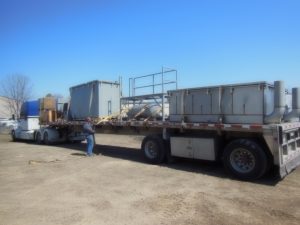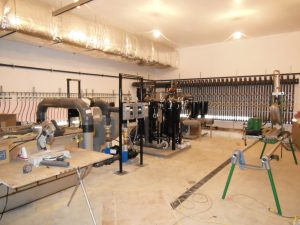
Case Study: Pipeline Spill Remediation
A turnkey vapor & water treatment system from H2K Technologies effectively cleans a polluted site for brownfield reuse.
Challenge: Pipeline release of gasoline product
A pipeline running through a residential area released approximately 40,000 gallons of gasoline underground. Quick action was taken by the responsible party to halt the leakage and minimize volume of the spill, but long-term action was also required. Gasoline, diesel, and other products collect unevenly and mix into the soil when spilled which makes extraction difficult. An underground gasoline release commonly requires a multi-faceted approach to restore the environment with minimal disturbance to the surrounding community. This project required an experienced water treatment system constructor capable of providing quick response, attentive communication, and strong process knowledge. H2K Technologies’ engineering team was a strong match to provide effective treatment equipment for this complex project.
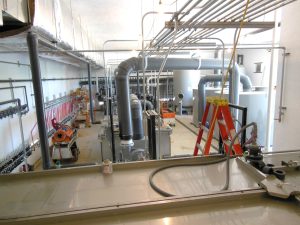

Solution: A broad treatment product line serves well in a complex water treatment process
Underground gasoline spill formations tend to both collect in groundwater and distribute through soil formations. This combination requires a mix of groundwater pumping and vapor extraction from soil to effectively remove all spilled product. This project used a large wellfield formation including 45 groundwater well pumps and 45 soil vapor extraction points.
Gasoline spills frequently pose the problem that spilled free product doesn’t cleanly separate from impacted groundwater. Even small quantities of free product will cause severe issues with process treatment equipment, so the first stage in this system was a coalescing oil/water separator. H2K Technologies’ oil separators use a coalescing media pack which enhances the rate of oil separation from water. OWS coalescing media provides a large surface area for oil droplets to collect and coalesce for high-efficiency free product removal. H2K Tech LLS-series oil/water separators include a passive skimmer to collect separated oils. Skimmed product is collected in a double wall product tank for transport and disposal.

Once the free product has been removed, treatment of dissolved volatile organic compounds can begin. An air stripper is a powerful piece of water treatment equipment to remove VOCs. Air strippers use high volumes of air across water to transfer VOCs from water to air. This technology is effective for a broad range of contaminants; gasoline range compounds like xylenes, benzene, ethylbenzene, and toluene were the targets of this low profile air stripper The DTA-series air stripper from H2K Technologies was selected for this process due to its strong BTEX removal and easy of maintenance. Approximately 98% of BTEX-range VOCs were removed with this air stripper operating at up to 200 GPM.
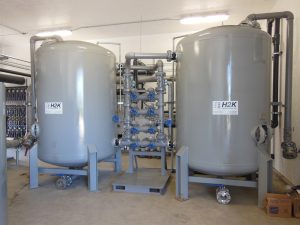
Air strippers are a strong option for bulk removal of volatile organics, but treatment to non-detect sampling frequently requires activated carbon vessels. Carbon filters are a strong option when 100% VOC removal is required. Activated carbon is designed to capture VOCs in the media pores and media is consumed as these compounds are removed from water. Pre-treatment with air strippers or other methods are commonly used to maximize the lifespan of a carbon media bed, especially in systems with high concentrations of pollutants. The combination of air stripping and carbon filtration in this system provided a strong combination to meet strict water discharge targets for BTEX. The 10,000 lb. carbon vessels in this system were sized to provide 18-24 month run time between carbon changeouts.
This system utilized a soil vapor extraction (SVE) system to support the pump and treat operation. The SVE process pulls vacuum on the subterranean formation to extract volatile organics from soil. Gasoline contains hazardous substances like benzene, ethylbenzene, toluene, and xylenes which easily transfer to vapor phase when exposed to air. Extracting large volumes of air via a properly designed well field will maximize the transfer of VOCs from the soil formation to vapor phase.
Soil structure varies greatly by location and soil vapor extraction methods will vary with different earth formations. This gasoline pipeline spill occurred in a location with loose packed sandy soil. Soil of this type typically has favorable radius of influence for a vacuum blower well field. The regenerative vacuum blowers used in this system were capable of the high airflow and moderate vacuum to extract gasoline range organics.

Vapor extraction often carries liquid/water droplets in the process which require removal prior to treatment. A vapor-liquid separator captures these liquid droplets to maximize performance and lifespan of the SVE blower and other offgas treatment equipment. Moisture separators & water knockouts from H2K Technologies feature a woven mesh demister and internal baffle plate to maximize water capture for better process performance.
Blower offgas in this process required treatment to destroy extracted volatile organics and prevent discharge to the atmosphere. An electric catalytic oxidizer was used for this VOC vapor treatment process. An oxidizer uses high temperatures and a noble metal catalyst for destruction of benzene, toluene, xylenes, and many other VOCs. The elevated temperatures break these compounds down into harmless base elements like carbon and hydrogen.

A comprehensive controls system is required to keep a complex water treatment system operating smoothly. The controls system for this project was designed, constructed, and installed by H2K Technologies. This process required operation in both non-hazardous and class 1, Division 2 environments due to the nature of the extracted vapors and liquids. A user-friendly operator interface controlled the system locally and remotely. A cellular based telemetry package provides remote system access and delivers critical process alarms via email. Our UL-listed panel shop supports projects large and small and is critical to the success of projects like this pipeline spill response.

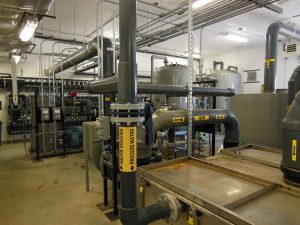
Results: System run time for an environmental cleanup project is dependent many factors and can range from months to decades. Environmental remediation and treatment is rarely a linear process and 100% contaminant treatment to non-detect sampling can be very challenging. This system operated for approximately 10 years before groundwater sampling reached non-detect for BTEX. Some equipment was able to come offline as milestone treatment objectives were reached. The electric oxidizer was removed from service after extracted vapor concentrations fell to acceptable standards. The air stripper was mothballed after water sampling determined liquid phase carbon changeouts would occur less than once per year.
The process to close a project site and consider it adequately clean for brownfield re-use is a serious matter to protect the health and safety of future residents. Monthly sampling is typically required at the source wells and at the system discharge to track system performance and monitor the affected area. Once water samples reach non-detect for hazardous VOCs at the source wells, a system is temporarily turned off and sample monitoring continues. A system can be fully decommissioned once post-shutdown sampling shows volatile organic chemical levels maintain non-detect samples.
H2K Technologies manufactures turnkey systems similar to this pipeline spill response every day and supports projects throughout the U.S. and Canada. Call us today and our knowledgeable engineering team will help your next water treatment project be a success.